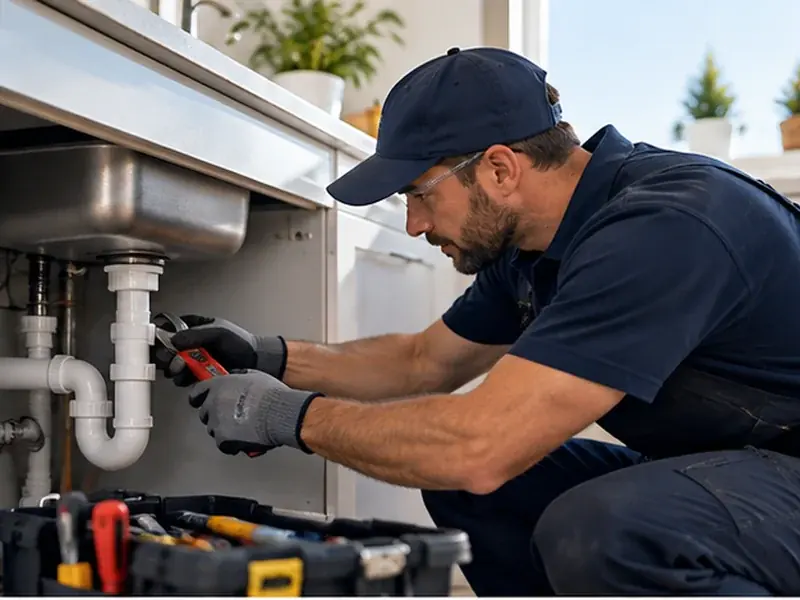
Emergency plumbing scheduling
For plumbing teams considering plumbing scheduling software, use same-day leaks as the test case. Document the starting status, who makes the decision, the customer-facing output and the record the next worker will see.
Map the actual sequence from customer request to approved work. Write down the exact event that creates a job, the owner of the next step, and what data must not be typed twice.
Ask the vendor to show the oldest open record alongside a brand-new request. A good workflow keeps ownership and status visible rather than hiding exceptions in comments.
Dispatch and skill matching
For plumbing teams considering plumbing scheduling software, use multi-truck dispatch as the test case. Document the starting status, who makes the decision, the customer-facing output and the record the next worker will see.
Create two operational examples with conflicting priorities and note which fields influence the decision. There should be an explicit path for urgent work, rescheduling and customer communication.
Measure whether the workflow changes cleanly after a cancellation or a second visit is required. A static demonstration of an empty calendar is insufficient.
Recurring visits and maintenance
For plumbing teams considering plumbing scheduling software, use book-to-invoice handoff as the test case. Document the starting status, who makes the decision, the customer-facing output and the record the next worker will see.
Test the office view and the field view separately. Ask which changes synchronize instantly, what happens without connectivity, and whether user permissions are understandable.
Use at least three realistic records and a technician who did not configure the system. Hidden setup dependencies often surface immediately.
Customer reminders
For plumbing teams considering plumbing scheduling software, use same-day leaks as the test case. Document the starting status, who makes the decision, the customer-facing output and the record the next worker will see.
Check the underlying economics or data ownership: which record is authoritative, how corrections propagate and whether an approved change can be audited later.
Run a revision, partial completion and unexpected cost through the system; the resulting customer and accounting records should agree.
Mobile use
For plumbing teams considering plumbing scheduling software, use multi-truck dispatch as the test case. Document the starting status, who makes the decision, the customer-facing output and the record the next worker will see.
Put a small-team scenario next to a multi-crew scenario. Identify the point where manual coordination stops working and which paid feature solves that exact constraint.
Compare annual total cost including required users, implementation, integrations and add-ons. A promotional starting price is not an equivalent quote.
Demo and pricing checklist
For plumbing teams considering plumbing scheduling software, use book-to-invoice handoff as the test case. Document the starting status, who makes the decision, the customer-facing output and the record the next worker will see.
Request a real-world demonstration using your own categories, team roles and exceptions, not a polished vendor dataset. Record which tasks required manual workarounds.
Keep a scored checklist with pass/fail evidence for your five highest-impact workflows, and check contract cancellation, data export and support terms.