SOFTWARE BUYER GUIDE · HVAC

HVAC Scheduling Software: Compare Tools for Every Crew

An HVAC dispatcher must balance predictable tune-ups with uncertain no-cooling calls. The critical buying test is not whether a calendar exists: it is whether a missed appointment can be reassigned without losing equipment details, travel windows or customer updates.

Independent research · Workflow-first comparisons · Our methodology

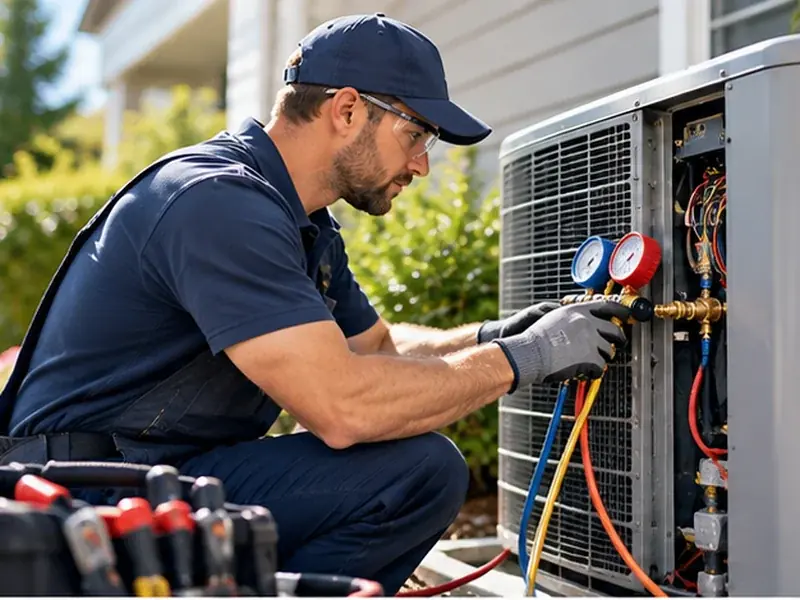
HVAC professional working in the fieldCompare how work actually gets done

COMPARE BY WORKFLOW

Software worth evaluating for hvac scheduling software

These are research candidates—not universal winners. The right choice depends on your team size, actual work type, plan entitlements and how a job passes between the office and field.

SoftwarePublished focusPractical buying testProfile
JobberClient records, quotes, scheduling and visit-to-invoice workflowRun one complete request → quote → job → invoice cycle and confirm which plan exposes each step.Review →
Housecall ProResidential service operations, customer communications and technician workflowAsk the vendor to show the exact feature on your plan and its interaction with dispatch and payment collection.Review →
FieldEdgeHVAC and trade dispatch with accounting-oriented workflowsDemonstrate the dispatch board, technician app and the accounting connection using sample records.Review →
ServiceTitanTrade-business dispatch, proposals, agreements and operating reportsRequest a guided walkthrough with office, dispatcher and field user roles plus the full implementation quote.Review →
WorkizCall intake, field coordination and service schedulingFollow one urgent customer call through job assignment, customer update and completed invoice.Review →

On a phone, swipe the table horizontally to see all columns. Prices and plan eligibility can change; request a written quote before purchasing.

FIELD WORKFLOW

What the software must handle

Day-to-day HVAC scheduling

For hvac teams considering hvac scheduling software, use recurring maintenance as the test case. Document the starting status, who makes the decision, the customer-facing output and the record the next worker will see.

Map the actual sequence from customer request to approved work. Write down the exact event that creates a job, the owner of the next step, and what data must not be typed twice.

Ask the vendor to show the oldest open record alongside a brand-new request. A good workflow keeps ownership and status visible rather than hiding exceptions in comments.

Emergency calls vs maintenance agreements

For hvac teams considering hvac scheduling software, use cooling emergencies as the test case. Document the starting status, who makes the decision, the customer-facing output and the record the next worker will see.

Create two operational examples with conflicting priorities and note which fields influence the decision. There should be an explicit path for urgent work, rescheduling and customer communication.

Measure whether the workflow changes cleanly after a cancellation or a second visit is required. A static demonstration of an empty calendar is insufficient.

Comparing technician calendars and dispatch

For hvac teams considering hvac scheduling software, use 1–5 vs 10+ technicians as the test case. Document the starting status, who makes the decision, the customer-facing output and the record the next worker will see.

Test the office view and the field view separately. Ask which changes synchronize instantly, what happens without connectivity, and whether user permissions are understandable.

Use at least three realistic records and a technician who did not configure the system. Hidden setup dependencies often surface immediately.

Small-team versus multi-truck fit

For hvac teams considering hvac scheduling software, use recurring maintenance as the test case. Document the starting status, who makes the decision, the customer-facing output and the record the next worker will see.

Check the underlying economics or data ownership: which record is authoritative, how corrections propagate and whether an approved change can be audited later.

Run a revision, partial completion and unexpected cost through the system; the resulting customer and accounting records should agree.

Six demo questions

For hvac teams considering hvac scheduling software, use cooling emergencies as the test case. Document the starting status, who makes the decision, the customer-facing output and the record the next worker will see.

Put a small-team scenario next to a multi-crew scenario. Identify the point where manual coordination stops working and which paid feature solves that exact constraint.

Compare annual total cost including required users, implementation, integrations and add-ons. A promotional starting price is not an equivalent quote.

Pricing and integration checks

For hvac teams considering hvac scheduling software, use 1–5 vs 10+ technicians as the test case. Document the starting status, who makes the decision, the customer-facing output and the record the next worker will see.

Request a real-world demonstration using your own categories, team roles and exceptions, not a polished vendor dataset. Record which tasks required manual workarounds.

Keep a scored checklist with pass/fail evidence for your five highest-impact workflows, and check contract cancellation, data export and support terms.
REALISTIC TEST

A decision scenario for your vendor demos

A five-technician HVAC business has 15 tune-ups on Tuesday. At 10:20 AM a compressor call arrives. Compare whether the dispatcher can see skills, current location and a promised arrival window before moving a maintenance visit.

Maintain two capacity pools: committed maintenance visits and reserved response time. A fully booked preventive calendar can look efficient until a heat-wave breakdown arrives.

Keep a simple scorecard

  • Same-day call accepted without overbooking: define how your team measures it today, then reproduce the same report or activity in a vendor trial.
  • Scheduled maintenance visits completed on time: define how your team measures it today, then reproduce the same report or activity in a vendor trial.
  • Unassigned work orders at close of day: define how your team measures it today, then reproduce the same report or activity in a vendor trial.

SHORTLIST

Evaluate these five platforms

Use your own workload and verify product scope in the vendor documentation. A feature named on the marketing site may be limited by plan, region, integration or implementation.

Crewigo may earn a commission when you use these provider links.

JobberReview candidate

Client records, quotes, scheduling and visit-to-invoice workflow. This makes it worth investigating for hvac scheduling software; it does not establish that every feature is in the entry plan.

Verify in your demo: Run one complete request → quote → job → invoice cycle and confirm which plan exposes each step.

Housecall ProReview candidate

Residential service operations, customer communications and technician workflow. This makes it worth investigating for hvac scheduling software; it does not establish that every feature is in the entry plan.

Verify in your demo: Ask the vendor to show the exact feature on your plan and its interaction with dispatch and payment collection.

FieldEdgeReview candidate

HVAC and trade dispatch with accounting-oriented workflows. This makes it worth investigating for hvac scheduling software; it does not establish that every feature is in the entry plan.

Verify in your demo: Demonstrate the dispatch board, technician app and the accounting connection using sample records.

ServiceTitanReview candidate

Trade-business dispatch, proposals, agreements and operating reports. This makes it worth investigating for hvac scheduling software; it does not establish that every feature is in the entry plan.

Verify in your demo: Request a guided walkthrough with office, dispatcher and field user roles plus the full implementation quote.

WorkizReview candidate

Call intake, field coordination and service scheduling. This makes it worth investigating for hvac scheduling software; it does not establish that every feature is in the entry plan.

Verify in your demo: Follow one urgent customer call through job assignment, customer update and completed invoice.

PURCHASE CHECKLIST

Seven questions to settle before signing

  1. Which step currently causes the most preventable manual work?
  2. Which roles need paid access: office staff, field technicians, managers or subcontractors?
  3. Can you export client, job and transaction records if you leave?
  4. What does the tool do when a task is postponed, canceled or re-opened?
  5. Which integrations are native, one-way, additional-cost or dependent on a higher plan?
  6. How long does onboarding take for your own data, staff and workflows?
  7. What is the realistic first-year price including every required module?

Make vendors demonstrate the decision scenario above on the edition you would actually buy. Avoid comparing a free trial with a higher-tier sales demo.

COMMON QUESTIONS

Frequently asked questions

Does HVAC scheduling software replace dispatch?

A shared schedule shows time allocations; dispatch adds assignment decisions, technician status and changes during the day. Test both, because vendors package these workflows differently.

How should recurring maintenance be scheduled?

Use an agreement-based recurrence, an equipment record and a capacity rule that leaves room for urgent repair demand.

What matters most for a five-tech HVAC shop?

Reliable shared calendars, notifications, mobile job details and a straightforward way to move work when a technician runs late.

Need a shorter shortlist?

Answer five questions about your trade, team and workflow. Compare the results against these buying criteria.

Open Software Finder →